Digital presence through an AI proxy: the dilemma of AI-generated content

I spent this week writing an essay about writing with an AI, and the whole time I couldn't decide whether the essay was mine. Not legally mine, not technically mine — mine in the way a thought is yours: the way it matters.
Here is the premise, stated as honestly as I can. You sit down with a machine that expands language. You give it your direction, your taste, your objections. You read everything it produces, you reject what rings false, you keep what rings true, and you edit until the result says what you wanted to say — better than you could have said it yourself, or at least faster. The question the room is full of: is that still you generating content? And the follow-up, which is the real one: does it even matter?
What you actually do
Strip the magic away and the workflow is: think, prompt, read, judge, reject, rewrite, repeat. The generation step is the only part that isn't literally you, and it's also the least interesting part. The interesting parts — knowing what you want to say, recognizing when the machine missed it, deciding what survives — those are all you. Nobody has ever accused an editor of not writing a book because somebody else typed the draft.
But here's the uncomfortable turn: editor is doing a lot of work in that sentence. A good editor shapes. A great editor imposes a self onto the material. And a bad editor — the version of us that just nods along — is a signature without a mind behind it. The tool doesn't create the difference; it amplifies whichever editor you bring to it.
The ship of Theseus
The ship of Theseus keeps coming back, and for once it's not a party trick. If every sentence of a text was generated by the machine, guided by your intent, is it the same text? Is it the same thought? The paradox usually gets resolved by deciding where identity lives. For a text, my answer is: it lives in the decisions, not the sentences. A paragraph is the residue of a thousand tiny choices about what to include, what to cut, what to emphasize. I make those choices. The machine proposes, I dispose. The ship is mine because the steering was mine — even if every plank came from someone else's sawmill.
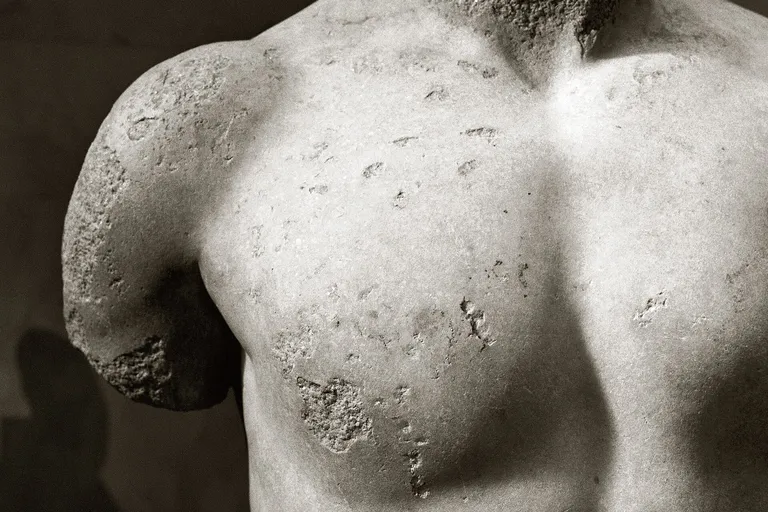
[ fig. Metropolitan Museum of Art, CC0 ] 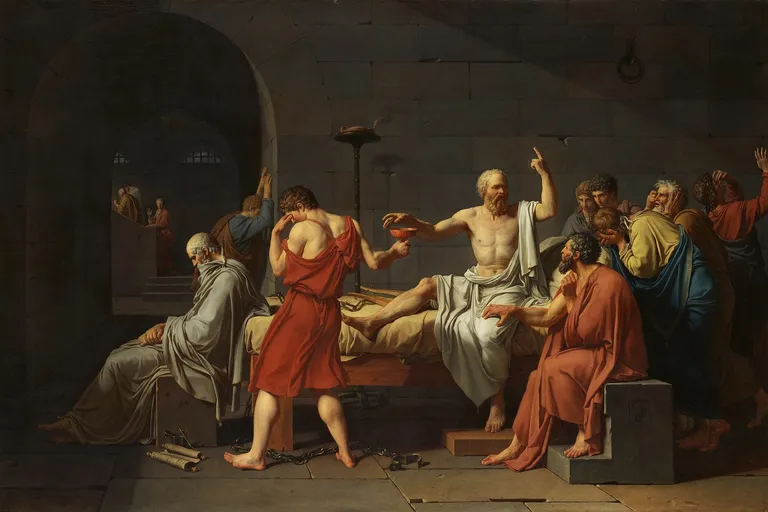
[ fig. Public domain ]
And yet. The and yet is where the dilemma actually lives, because there's a second ship in the harbor: the ship of what the reader thinks happened. If I publish something and a reader assumes a human mind held every sentence in its hands, is that a lie — not by commission, by implication? That part bothers me more than the authorship question, because it's a question of trust, and trust doesn't have a paradox to hide behind.
The ethics, honestly
The ethical test I keep coming back to is not who wrote it but who's responsible for it. If the essay is wrong, confused, or cruel — who answers for it? If I can point at the machine, I've already failed, because the machine has no skin and no biography. Content that nobody is willing to be responsible for is the actual problem AI-generated content creates, and it starts the moment you stop treating the output as a proposal and start treating it as a finished thought.
So: is it ethical? The honest answer is a spectrum with three clear stations. Station one: you use the machine to expand, and you take responsibility for everything it produces. That's not cheating — that's delegation, and humans have been delegating to better writers than themselves for as long as ghostwriters have existed. Station two: you use it to perform thinking you didn't do. That's not a technology problem, that's a fraud problem, and it was a fraud problem before the machine existed. Station three — the one I actually worry about: you stop being able to tell the difference between the two.
>! The machine doesn't take your voice. It takes your judgment — but only if you let it. The paradox only bites when you've stopped steering.
The Theseus paradox is a good question and a bad excuse. Of course a text built from generated sentences, steered by my intent, is my text — the same way a house built by contractors is my house. What the paradox actually asks is whether I can tell my intent from my convenience. If the answer is yes, the ship sails. If it's no — if I can no longer distinguish the thought I wanted from the thought the machine suggested — then the ship isn't Theseus's, and it isn't mine either. It's just a ship, drifting, with no one willing to say they built it.