Old school vs new school blogging: what the blog actually is

Somewhere between the first blog post ever written and the latest video titled five mistakes everyone makes, the word blog lost its meaning and gained a business model. I want to talk about what it used to be, what it became, and whether the people doing it now have it easier or harder than the people who did it when it was hard.
The premise, stated plainly. At the beginning, blogging was writing. It was essays published to an obscure URL, read by a few hundred people who found you through a link from a link. It had no revenue model, no algorithm, no strategy. What it had was a brutal implicit contract: you had to produce actual readable material — wit, gut, depth of thought — because nothing else would keep anyone coming back. There was no feed to trap them. The reader had to choose you, every single time.
What it used to be
The early blogs were, mostly, bad. Let's not romanticize. But the bad ones died quietly, and the good ones were good in a way that's now nearly extinct: they were one person thinking in public, in prose, at length. The form forced a kind of honesty that video and short-form never quite manage, because prose has no performance to hide behind. You can't smile your way through a bad paragraph. You can't cut to b-roll of your face looking thoughtful. The words either hold or they don't, and everyone can see it.

[ fig. Wikimedia Commons, CC BY-SA 4.0 ] 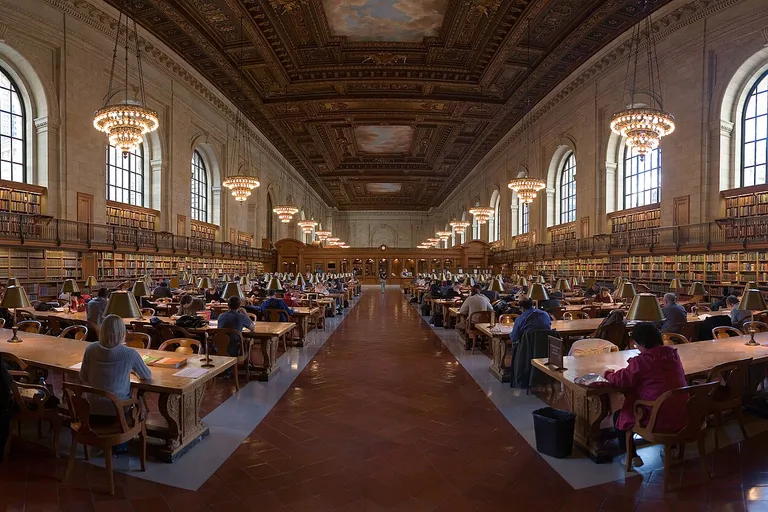
[ fig. Wikimedia Commons, CC BY 2.5 ]
That's the thing the old school had that the new school lost, and I don't mean tools. I mean the absence of a safety net. The reader could leave at any moment, permanently, and there was no recommendation engine to bring them back. Every paragraph was a job interview for the next one.
What it became
Then the platforms arrived and did what platforms do: they removed the friction and charged for the removal. Now blogging means posting a video of yourself talking, occasionally, with a caption that summarizes the point so nobody has to watch. The depth moved out and the metrics moved in. Nobody can tell you whether your writing is good, but everyone can tell you whether your watch time is up — and one of those numbers is a lot easier to game.
I don't want to sneer at it, because the new school has real advantages. Distribution is instant. Feedback is instant. The barrier to entry is basically zero: a phone, a face, a take. A writer in 2003 would have killed for the reach a mediocre creator gets by accident in 2026. The old school had to be good to be read; the new school only has to be visible. That's a trade, not a victory, and it cuts both ways.
Is it easier or harder now?
Easier, in every mechanical sense: publishing, reaching, monetizing, iterating. Harder, in exactly one sense, and it's the sense that matters: being read by people who came for you rather than for the algorithm's recommendation. The new school competes in a river of content where attention is rented by the second. The old school competed in a small pond where attention was a choice. Which is harder? The old school had to write better. The new school has to win a lottery, every day, forever, or be swept away.
And the cruelest irony: the skills that made the old school work — wit, gut, depth — are now a competitive advantage precisely because they're rare. The river is full of content and empty of thinking. If you can write an essay that holds a reader's attention without a single cut, you are, in 2026, a unicorn. The bar for good hasn't moved; the bar for noticed collapsed, and the gap between the two is where the opportunity lives.
So what is a blog, actually? It's a place where one person thinks in public and the thinking is the product. That was true in 2003 and it's true now — it's just that most of what calls itself blogging stopped being that, and the people doing the real thing are harder to find, which is exactly why they're worth finding. The new school isn't having it easier or harder. It's having it different: infinite reach, finite attention, and a skill shortage that only looks like bad news. If you can write — actually write — the old school never left. It's just waiting for someone to remember that a video is not an essay.